The goal of employee management is to provide support and encouragement and give feedback. It involves ongoing communication. For an individual to feel most cared for in their role, three things are necessary:
Effective coaching involves ongoing, honest, two-way communication. It also involves consistent and well-written documentation.
Both management and leadership skills are necessary for overseeing staff. Management focuses on the tasks, systems, procedures, and processes. Leadership focuses on relationships, vision, and motivation. Together these components help make the team effective.
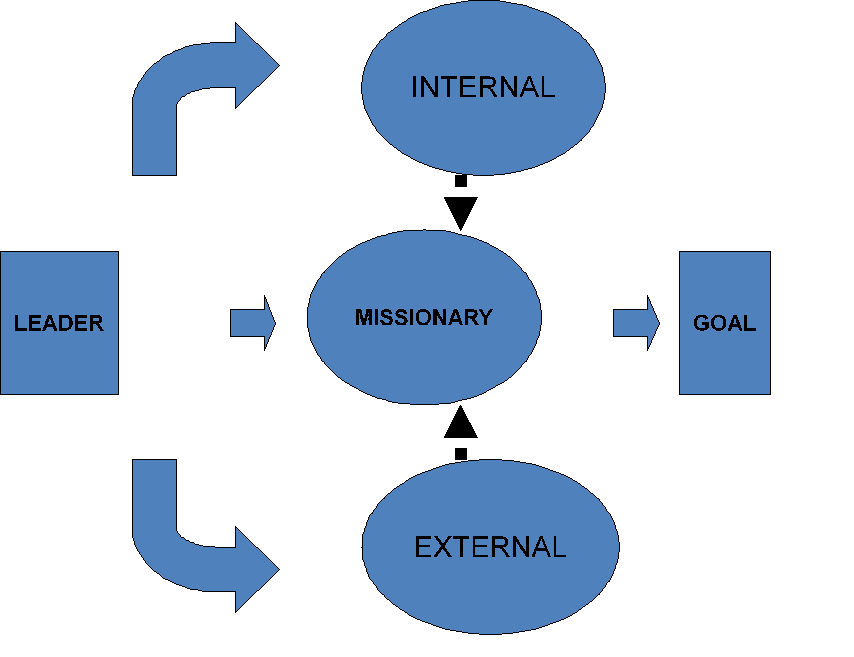
One model, the Path-Goal Model, developed by Robert House, looks at how a good leader must identify the goal (usually job satisfaction or effectiveness/productivity) and what factors are holding an individual back (either through external or internal factors). Good leadership is demonstrated in helping the missionary address areas internally or externally that keep the missionary from reaching the goal.
Some of those INTERNAL factors may be employee style, emotional health, physical health, spiritual health, confidence, experience, or understanding. EXTERNAL factors could include working relationships, task structure, tools, or processes/systems.
The GOAL for both the staff member and you as the supervisor in a ministry context is usually the same – fruitful ministry. Factors for the goal typically fall into two categories: Employee Satisfaction – work environment and passion for the job; Ministry Performance – seeing desired results, fruitfulness, etc. By helping the staff member identify those factors and providing a plan to encourage and assist in those areas, ministry satisfaction and effectiveness can be increased.
When you notice that a missionary does not appear to be satisfied in their role, you can walk back through some of the internal and external factors that may impact that missionary to understand why. Internal factors might include a desire for change because they are bored, values or interests have changed, emotional wounds may have been triggered of which the missionary is aware or unaware, etc. External factors might include unresolved conflict, organizational changes that the missionary has not “bought into,” etc.
You may also notice that the missionary has lost some effectiveness in their roles. This is also a good indication that further probing may be needed to understand why. External factors that might impact this could be a change in reporting structure – perhaps the missionary is not as comfortable or does not work as well with their new ministry supervisor. It could also be an internal factor such as confidence - perhaps they received feedback that has caused them to pull back or may have immobilized them.
Some of the tools listed in the next section will help probe those internal and external factors.